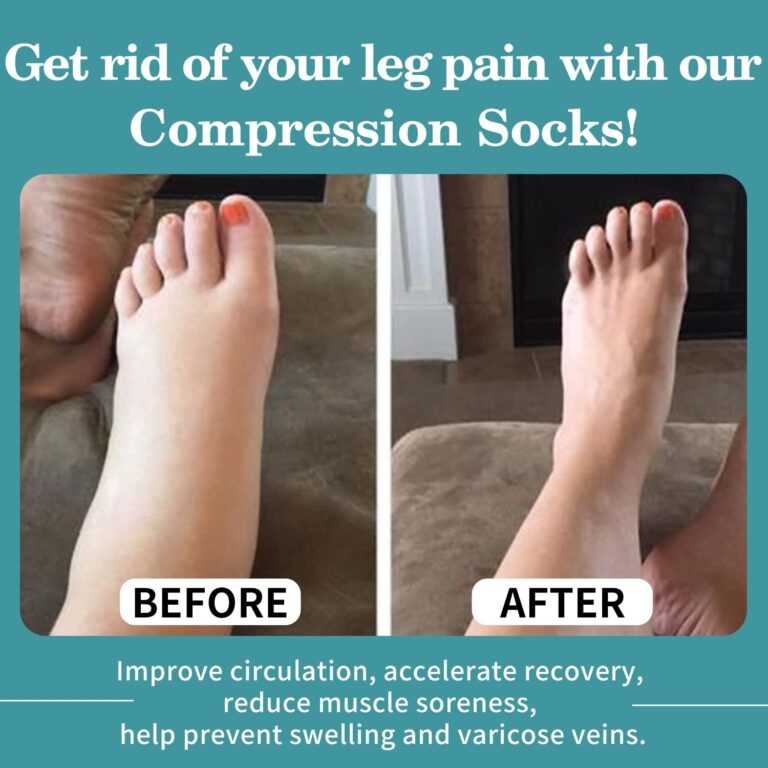
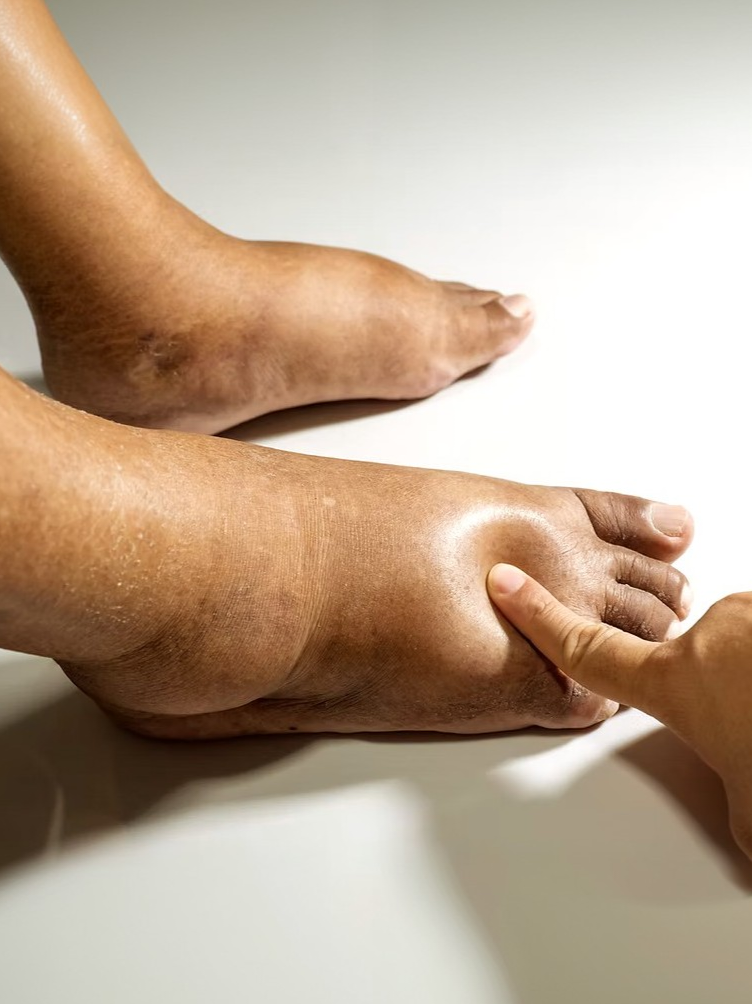
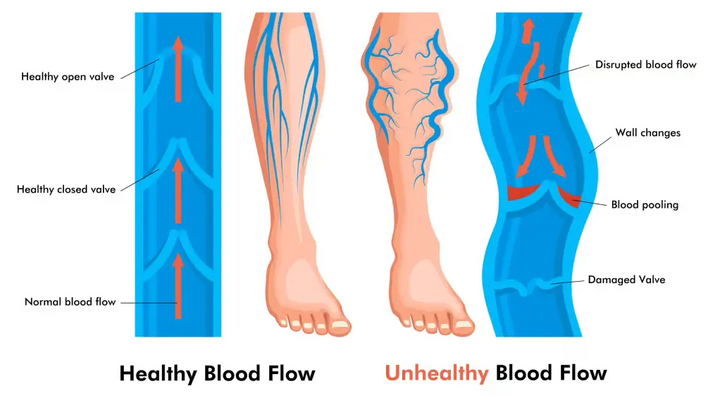
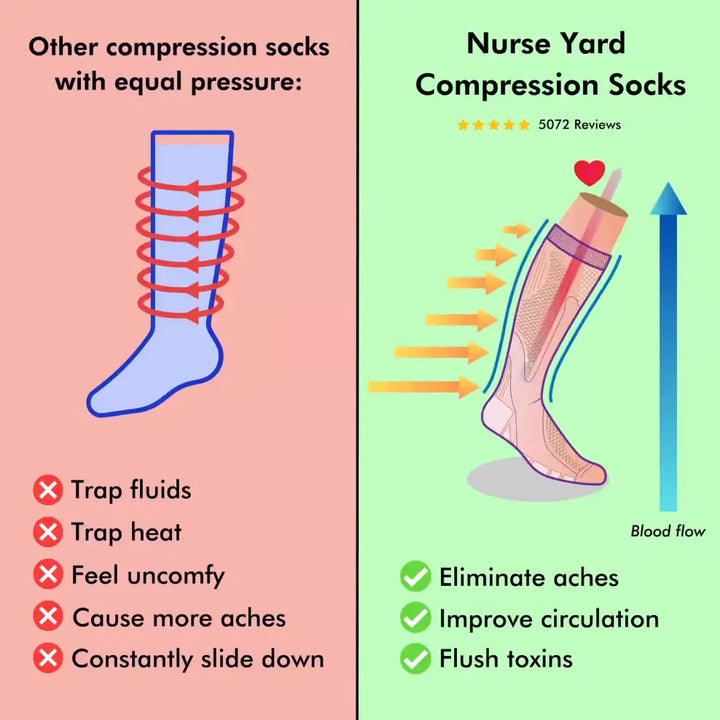
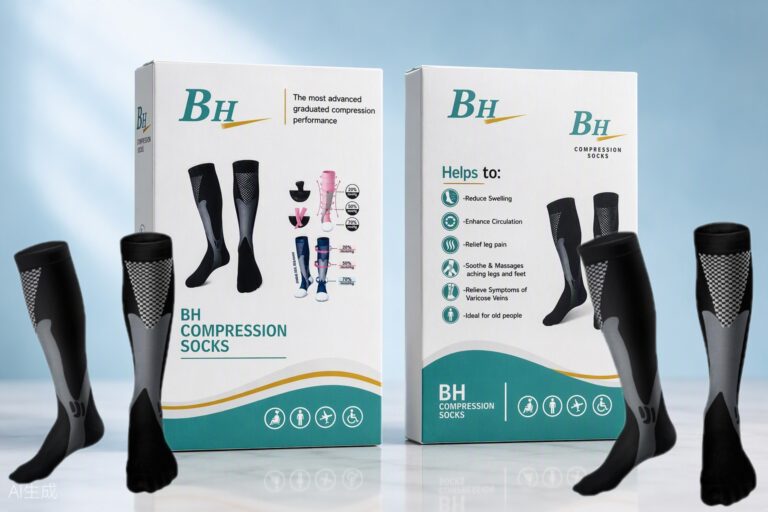
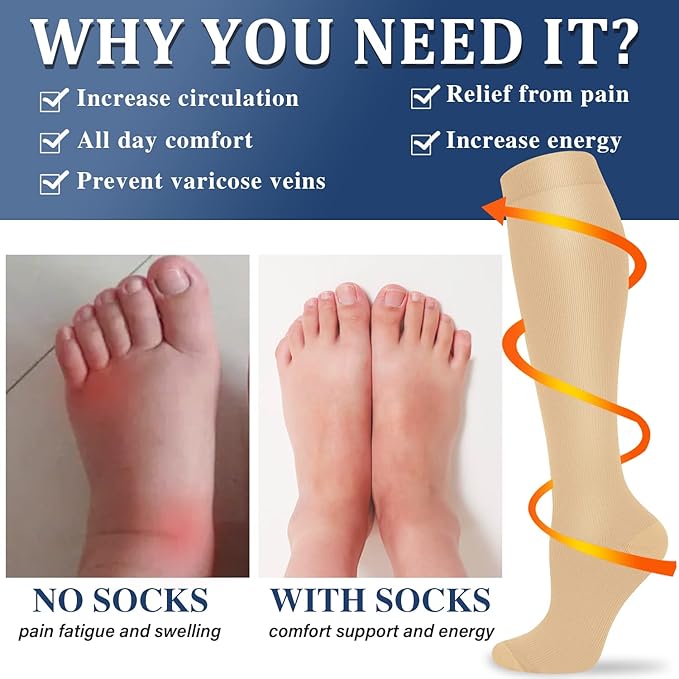
By improving circulation, compression socks can help reduce swelling in the legs, ankles, and feet, which can be particularly helpful for individuals who spend long periods standing or sitting.Â
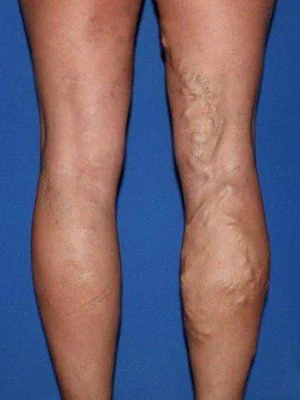
Compression socks can alleviate pain and discomfort in the legs, especially for those with conditions like varicose veins or chronic venous insufficiency.Â
Compression socks can help prevent blood clots, such as deep vein thrombosis (DVT), by improving blood flow and preventing blood from pooling in the veins.Â
Venous problems:
Chronic venous insufficiency, varicose veins, and venous ulcers can all benefit from compression socks.
Deep vein thrombosis (DVT) and blood clots:
Compression socks can help prevent blood clots in the legs by improving blood flow and reducing pooling.
Swelling and edema:
Compression socks can help reduce leg swelling and edema, which is a common symptom of venous insufficiency.
Orthostatic hypotension:
Compression socks can help manage orthostatic hypotension, where blood pressure drops when standing up, by improving blood flow and preventing blood pooling.
Post-thrombotic syndrome:
Compression socks can help manage the pain and discomfort associated with post-thrombotic syndrome, a condition that can develop after a blood clot in the leg.
Lymphedema:
Compression socks can help reduce swelling and improve lymphatic drainage in people with lymphedema.
Arthritis Osteoarthritis
potentially improving circulation, reducing swelling, and alleviating pain in the feet and lower legs. The gentle pressure applied by compression socks can also provide support for the joints and enhance stability.